




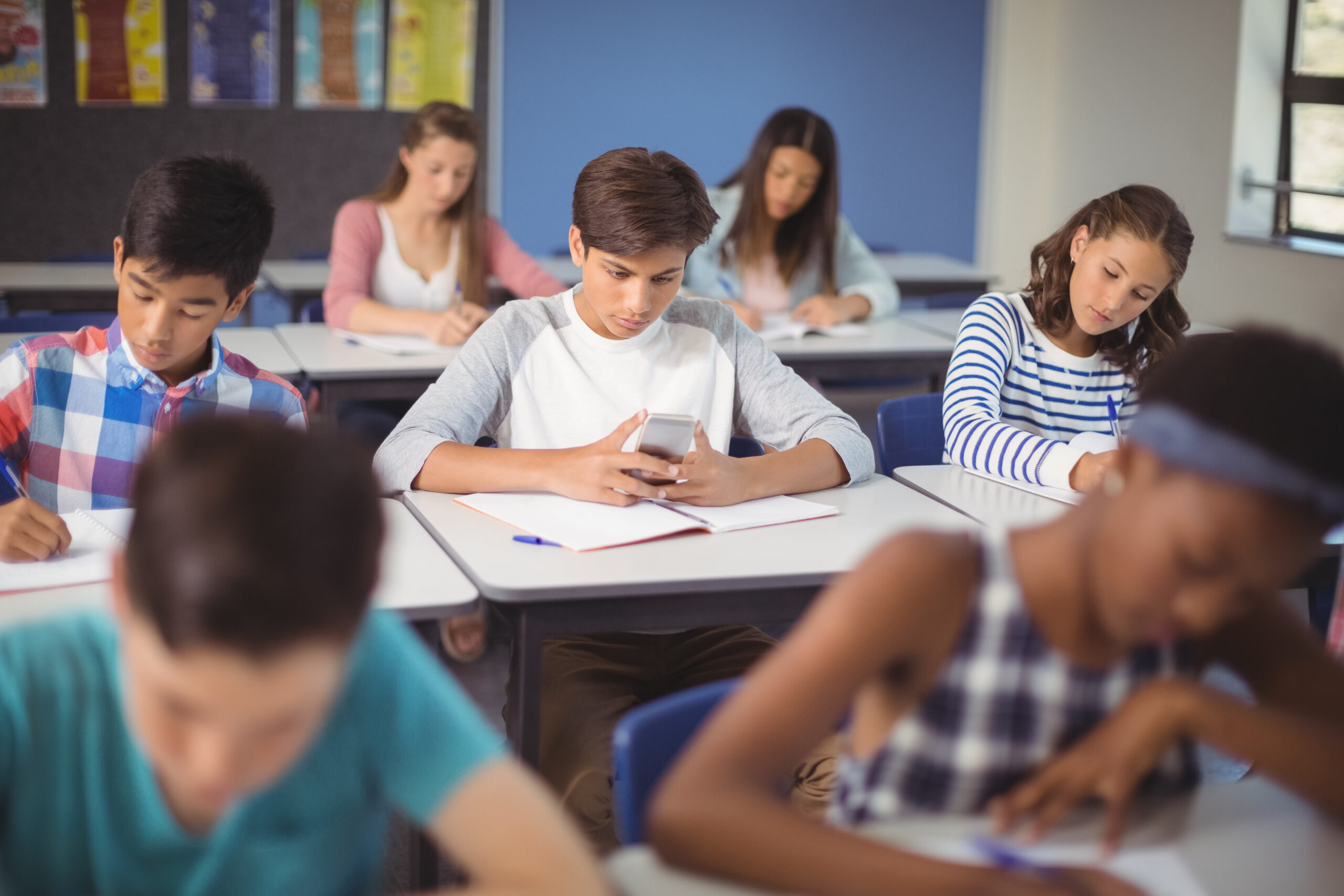
WASHINGTON — A growing number of U.S. states are enacting laws to ban or regulate cellphone use in schools, driven by concerns over the devices’ impact on student attention, behavior, and mental health. As of May 2025, 25 states have implemented such laws, with 16 adopting measures this year alone. An additional eight states and the District of Columbia have introduced rules or provided guidance to school districts, reflecting a nationwide trend toward stricter “bell-to-bell” bans, especially in elementary and middle schools. AP News
Educators and policymakers advocating for these bans cite studies linking excessive smartphone use to decreased academic performance and increased mental health issues among students. Research indicates that students without access to cellphones during class perform 13-20% better on exams, and the presence of phones correlates with higher anxiety levels and reduced mindfulness.
Stay in contact with your kids no matter what. Click here to learn more about Rapid Radios.

Get an extra 10% off by ordering your Rapid Radios for a limited time. Click here.
“The latest School Pulse Panel data underscore that school leaders see cell phones as more than just a classroom distraction,” said Peggy Carr, Commissioner of the National Center for Education Statistics. “With 53% of school leaders reporting negative impacts of cell phone use on academic performance, and even more citing negative impacts on students’ mental health and attention spans, schools are facing a critical issue.” The Guardian+10National Center for Education Statistics+10The Washington Post+10
Public opinion largely supports these measures. A Pew Research Center survey found that 68% of U.S. adults favor banning cellphone use during class for middle and high school students, though only 36% support all-day restrictions. Support varies by age, with older adults more likely to endorse bans. Pew Research Center
However, some experts and students argue that outright bans may not address underlying issues and could have unintended consequences. Christopher J. Ferguson, a psychology professor, analyzed data from districts with strict bans and found no significant improvement in academic performance or reduction in bullying. In some cases, mental health referrals increased, and hundreds of students faced suspensions over cellphone-related infractions. Jacksonville Journal-Courier
“While it’s hard to draw definitive causal conclusions, the evidence does not support claims that bans produce consistent benefits,” Ferguson wrote. He advocates for digital literacy education as a more effective approach.Jacksonville Journal-Courier
Students have also expressed concerns. At Wilton High School in Connecticut, a full-day cellphone ban implemented in the 2024-25 school year led to student backlash. Critics argued that the policy hindered social interaction and failed to teach responsible technology use. WikipediaMD Searchlight
Despite mixed evidence, the movement to restrict cellphone use in schools continues to gain traction. Proponents argue that reducing distractions is essential for creating a focused learning environment, while opponents caution against blanket policies that may overlook the complexities of technology’s role in education.AP News
As the debate unfolds, schools and policymakers grapple with finding a balance between minimizing distractions and preparing students for a digitally connected world.