





FERNDALE, Calif. — UPDATE– Tsunami warning has just been cancelled.
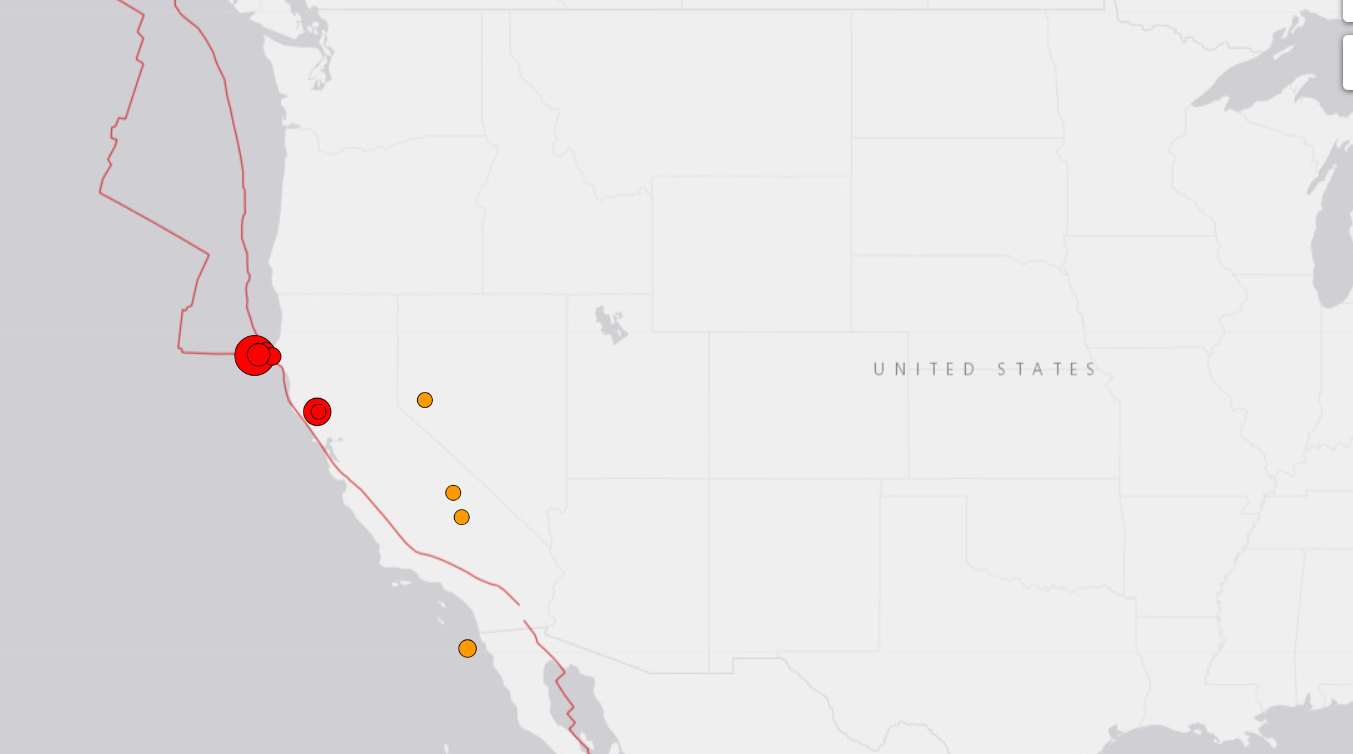
A powerful 7.0-magnitude earthquake struck Northern California on Thursday, shaking communities and prompting immediate concerns of a potential tsunami, according to the United States Geological Survey (USGS).
The earthquake’s epicenter was reported near the town of Ferndale in Humboldt County, an area prone to seismic activity. The tremor sent waves of fear across the region as residents felt intense shaking, with early reports indicating potential structural damage and power outages in nearby areas.
In response, the National Tsunami Warning Center issued a tsunami warning for coastal regions stretching from Davenport, California, to the Douglas/Lane County Line in Oregon. This warning includes major metropolitan areas such as San Francisco. Officials have urged residents in low-lying coastal zones to move to higher ground and avoid the shorelines as the situation develops.
Precautions Underway
Local emergency management agencies are closely monitoring the situation, and evacuation protocols have been initiated in some vulnerable areas. Authorities are emphasizing the need for preparedness as aftershocks and potential tsunami waves remain a threat.
“We are advising residents to stay tuned to emergency broadcasts and follow instructions from local officials,” said a spokesperson for the National Tsunami Warning Center. “While it is too early to confirm the scale of tsunami activity, caution is critical.”
A History of Seismic Risk
Humboldt County and its surrounding areas sit on a seismically active region where the Pacific, North American, and Gorda tectonic plates converge. This geological setting has historically produced significant earthquakes, heightening local awareness and preparedness.
The USGS is currently assessing the earthquake’s full impact, including damage and any shifts in fault lines. Officials will continue to provide updates on the situation as they become available.
Residents are encouraged to check in on neighbors, particularly those who may need assistance, and to have emergency kits ready. For the latest updates, follow alerts from the National Weather Service and USGS.
This is a developing story.